
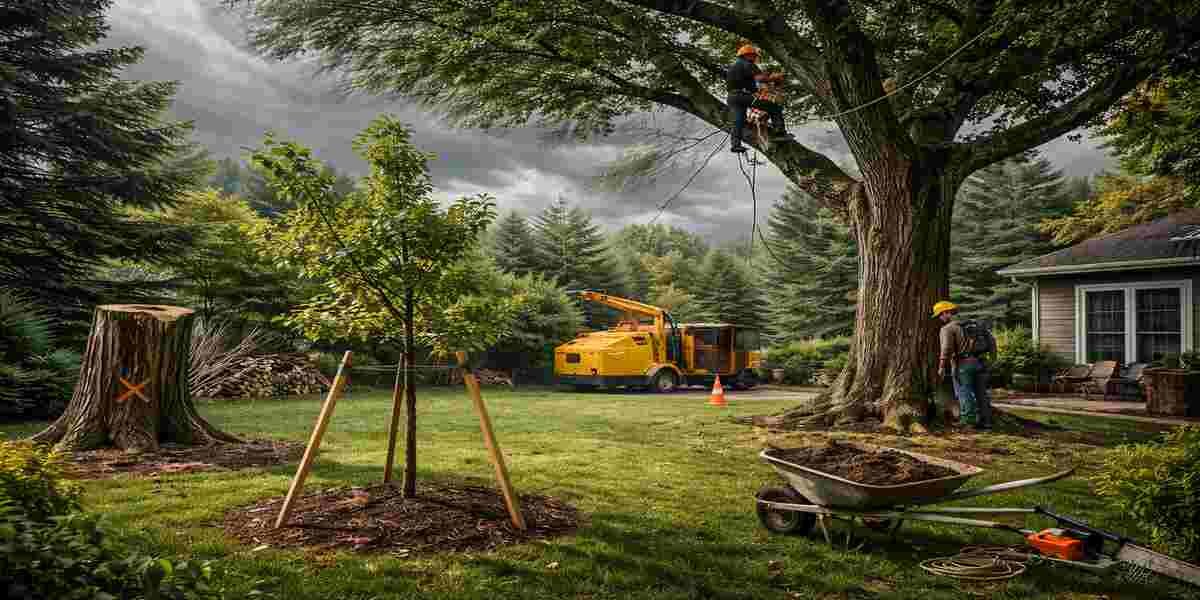
Did you ever see a strong wind in your trees, and used to ask yourself whether your trees would get through the storm? Strong winds may transform all the lovely trees into great dangers, they break branches, tear off trunks and destroy houses, vehicles and electric power lines. Although storms are unpredictable, their devastating nature does not necessarily need to be the same. When properly prepared and taken care of, your trees can be very strong, flexible and safe even in case of heavy winds. We will discuss some useful methods as per professional teams of how you can save your trees and minimise the risk of losing your money to a storm.
1. Inspect Trees Regularly
The initial measure in prevention is routine inspections. Search in dead branches, cracks on the trunk, leaning trees or disease. The weak spots increase the susceptibility of the trees to pressure caused by powerful gusts. Test your trees now and then, and particularly in storm seasons. Intake of small problems can be corrected early when they are small and they cannot cause dangerous breakage when the wind is high.
2. Prune Strength and Balance
Safety and structure are enhanced through proper pruning. Eliminating branches that are dead, damaged or crossing will minimize weight and enable wind to blow through the canopy rather than blowing against it. The trees should not be heavily topped because this makes them weak. Rather, seek to have balanced thinning to retain the natural shape of the tree and also to reduce resistance to strong winds.
3. Strengthen the Root System
Trees are anchored on strong roots. The root stability becomes poor due to compact soil, poor drainage system or shallow watering. The trees with weak roots are the ones that tend to fall during a storm. Water heavily and infrequently to promote the growth of roots downwards. Mulching the base will retain the moisture, control the temperature of the soil and maintain health of the roots.
4. Check Soil and Drainage
Agricultural weather is significant in wind resistance. Saturated soil causes loosening of roots and therefore the trees can root more easily. Conversely, root development is not healthy when using dry and compacted soil. Proper drainage should be ensured around trees and water must not be allowed to stagnate around trees. The aeration of the soil enhances the circulation of oxygen and enhances the root system in the long run.
5. Stake Young or Leaning Trees
Temporary support may be required to young trees and newly planted ones. Staking assists them to be upright as roots deepen their roots. Use loose strings and have some freedom of movement and this will promote natural strengthening. When the tree is stable, remove any stakes so that it grows freely and safely.
6. Remove Hazardous Trees
Prevention sometimes entails the knowledge that it is safest to remove. The dead, severely leaning, hollow, or diseased trees are very dangerous when there is a storm. Professional evaluation will give adequate attention to the dangerous trees so that they are removed before they incur damages. Prevention eliminates property and individuals.
7. Protect Surrounding Areas
Before storms occur, clear the surrounding around trees and heavy objects, vehicles, and outdoor furniture. When the branches are broken, there are fewer obstacles, which have fewer opportunities to create additional damage. Cull trees near roofs, power lines, and windows as well in order to reduce the chance of falling tree branches.
Conclusion
Strong winds do not necessarily mean disaster to your trees and property, according to the expert crew. Frequent checkups, intelligent pruning, healthy roots, and removing weak trees in time are major ways of reducing the dangers of storms. With the help of being proactive and providing your trees with the attention they deserve, you can make your trees stay strong, flexible, and safe even during the time when the powerful winds pass around it, reducing tree roots risk.