
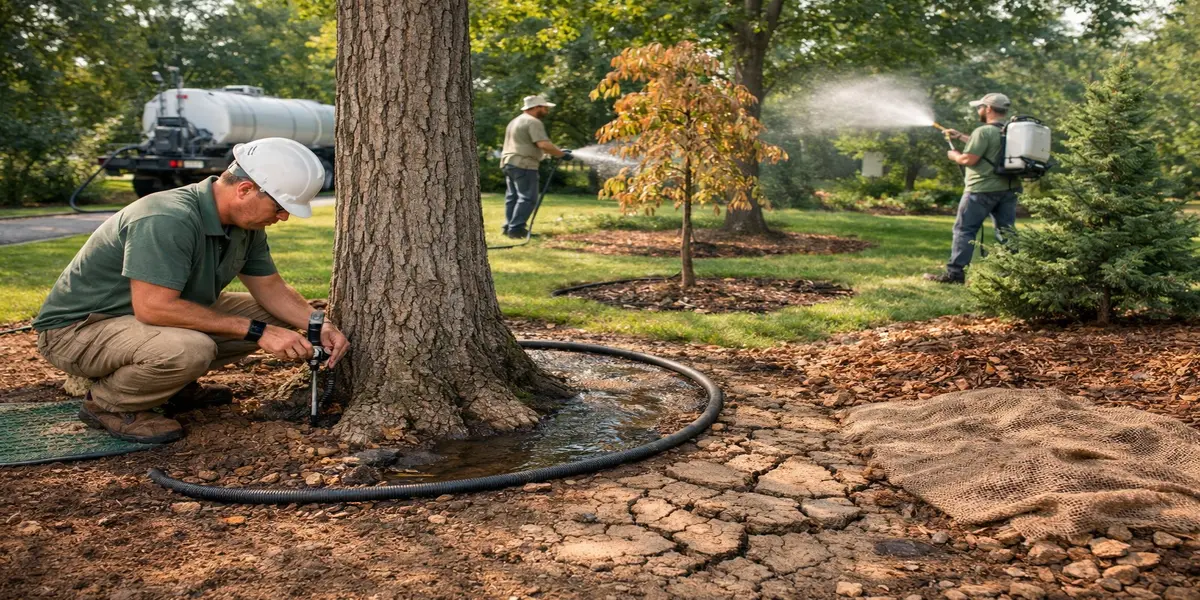
Drought Stress: Trees Experts Tips to Protect Your Trees
Have you noticed that trees often show stress even before the soil looks completely dry? Drought damage does not happen suddenly. It develops over time due to poor watering depth, weak roots, compacted soil, and missed seasonal care. Many people react only when leaves turn brown or branches begin to weaken. By then, recovery becomes slow.
With guidance from a professional approach, tree care becomes preventive rather than reactive. This blog explains practical, real-world tree care tips that reduce drought damage using planning, timing, and consistent habits that protect trees during water stress periods.
1. Understand Early Signs of Drought Stress
Tree damage begins quietly below the surface. The signs of an early warning include wilting leaves, premature leaf dropping, reduced foliage, and grey color. A moisture imbalance is also shown by cracked soil around the trunk. Ignoring these signals weakens roots over time. With support from an expert crew, early detection becomes a routine inspection rather than an emergency call.
Professionals understand how different tree species respond to heat and water shortage. The key principle is observation before damage. Early action stabilizes tree health and reduces long-term recovery costs.
2. Spot Water Stress Early
- Visual signs checklist
- Leaf curl, early fall, faded green tone
- Dry branch tips, brittle stems
- Soil pulling away from edges
- Slow shoot growth, light crown thinning
Experts inspect weekly, especially on high-risk species like shallow-rooted ornamentals. They compare past seasonal behavior to current changes to confirm abnormal stress. Early detection buys time for staged recovery instead of panic irrigation. This method is quick and accurate, but not perfect; some symptoms mimic nutrient or disease issues. The trade-off is speed over precision. Always validate by checking soil moisture 4–6 inches below the surface. Catching stress early means fewer inputs later and a stronger recovery after rains return.
3. Protect the Root Zone
- Root zone action list
- Block foot traffic, equipment pressure
- Skip digging near the base
- Cover exposed roots
- Avoid chemicals and heat sources
Tree specialists treat the base like a recovery ward. They know most damage happens underground before the crown reacts. Keeping the area undisturbed ensures water-absorbing roots stay intact. This practice is highly effective and low-cost, but assumes the zone is already in fair condition. Blind spot: compacted sites still struggle even if undisturbed. Principle: roots need air, space, and calm to function under drought. The next step is to pair this protection with soil improvement to unlock the full benefits.
4. Deep, Slow Watering
- Watering protocol
- Water early morning or late evening
- Use low flow for 30–90 minutes
- Soak 8–12 inches deep
- Skip daily sprinkling
Tree experts irrigate like snipers, not fire hoses. Deep watering encourages downward roots and ensures long retention. Frequent shallow watering creates weak surface roots that dry faster. Risk: overwatering without checking depth. Principle: less often, more effective. Assumption: soil drains reasonably well. Blind spot: clay-heavy soils may need shorter cycles spaced further apart. Always test drainage and adjust. This practice uses time as a tool, not pressure.
5. Add Anti-Desiccant Support
- Spray outline
- Apply to leaves to reduce moisture escape
- Target only high-value trees
- Reapply every 4–6 weeks
This thin protective film slows water loss from foliage. Experts use it selectively because it doesn’t replace soil moisture.
Trade-off: temporary relief, not a cure. Risk: applying in peak heat can backfire. Principle: assist the system, don’t depend on it.
6. Choose the Right Irrigation Tools
Specialists use drip hoses, soil soakers, or water bags that deliver moisture directly to roots without waste. Mist sprayers are avoided as they lose water to the air. This works because water must reach roots, not the atmosphere.
The blind spot is using fast tools that look effective but don’t penetrate; experts measure depth, not appearance. The trade-off is slower delivery but longer retention. Proper tools ensure maximum water efficiency.
Conclusion
Drought stress management is not about flooding trees with temporary fixes. The professional team optimizes water access, protects the base system, balances the canopy, and upgrades soil behavior to ensure long-term stability. These practices work because they reduce waste, support the underground system, and lower energy demand during heat stress. The biggest risk is misreading symptoms or applying too much too soon.
Success lies in staged response, smart timing, and protecting the water network below the surface. When drought peaks, the best managers are those who focus on roots, cool the soil, and intervene early. The trees that survive are not the most watered, but the most wisely supported, just like measures to stop restroom freezing, thoughtful early action prevents bigger problems later.