
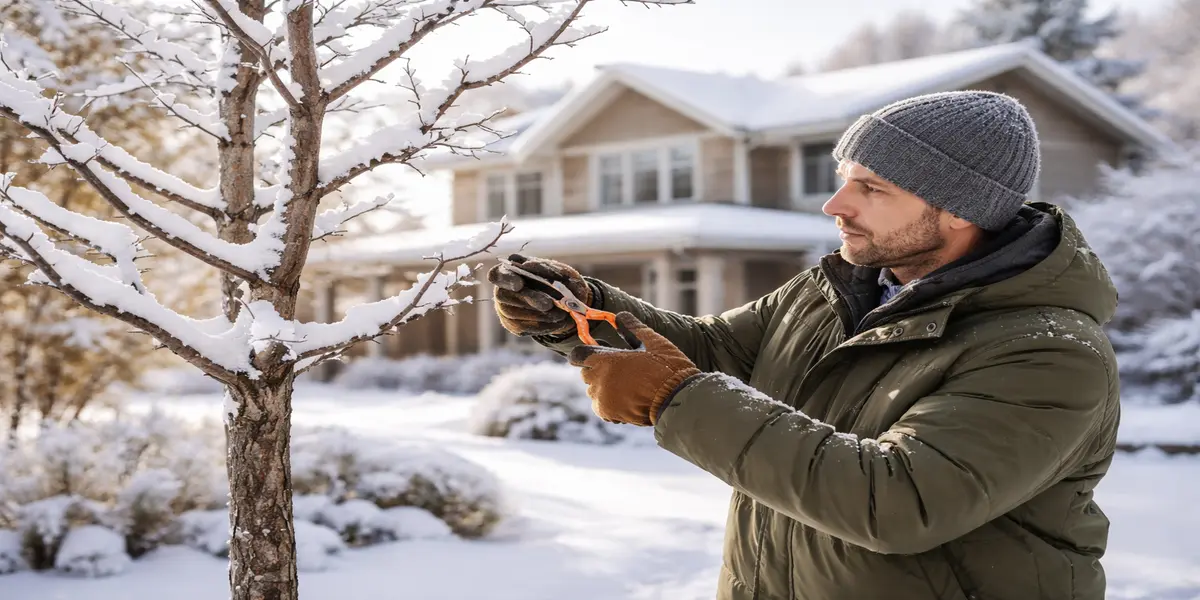
Caring for Trees in Winter: A Homeowner’s Complete Guide
Did you ever see the trees in your yard in the winter and wondered whether they require special attention in winter? Although trees seem to be inactive and dead during winter, they are still in need of care and protection in order to stay alive. Strains may be experienced on the trees especially the young or newly planted trees because of the cold weather, frost, strong winds and snow. Winter care does not only contribute in making sure that your trees are not damaged to the seasonal changes but it also makes sure that once spring arrives, your trees would be better and healthier.
Preventive measures which will make the trees safe and firm even during winter should be taken by the homeowners. It takes minimal effort to make sure that your trees are surviving the rough weather and will be able to keep on making your landscape beautiful.
1. Shield Tree Roots by using Mulch
The best method of taking care of trees during winter is by mulching them, as per tree professionals. Mulch is a protective coat which serves to regulate the soil temperature and to prevent the roots to freeze during cold nights. It also keeps the soil moist, which is very vital as winter winds have a tendency of drying the ground.
Apply some organic Mulch like chips of wood, bark and compost to the surrounding of the tree. Ensure that the mulch is several inches off the trunk to prevent accumulation of moisture which may result in rot.
2. Water Trees Before the Ground Freezes
Most home owners may think that trees do not require water during the winter season yet they are not completely so. The trees also need water, particularly when the soil is unfrozen. Deep watering of trees late in the fall, or early in the winter, will help trees to store adequate water to make it through the dry winter season.
Especially the young trees, evergreen trees are mostly affected by this as they lose moisture through their leaves or needles even during winter.
3. Prune Dead or Weak Branches
Doing the job of checking the dead, damaged and weak trees is best done during winter. When there is a storm or heavy snowfall these branches could turn to be hazardous since they have higher chances of breaking.
Prudent trimming off the diseased branches favors the tree structure and minimal chances of falling branches. During winter when a lot of trees have lost their leaves, it becomes easier to observe the structure of the branches and determine the areas of problems.
4. Shield Youthful Trees against Low Temperatures
Trees which are still young or those that are planted are particularly susceptible to severe winter. Low temperatures may cause harm to the tree barks and undermine the tree structure.
To prevent young trees, it is possible to wrap the trunk with tree guards or burlap. This plain protection cover assists in protecting the cover against intense cold, frost fissures, and winter sunburns. It also defends the tree against animals that might chew on the tree bark during winter when there is a dearth of food.
5. Clear Branches: Clean Snow Strictly
The heavy amounts of snow may pressure tree branches and make them break. After the snow has fallen, it would be advantageous to clean up the trees by removing the excess snow on the tree branches particularly when there are smaller trees.
Easely sweep the snow up using a broom or an object that is soft. Do not shake the branches very hard since the frozen ones will be weak and will break so easily.
6. Observing Tree Stress Signs
It is possible to have stressed or diseased trees even when the tree is in winter. Look after the storms in the spots of broken bark, leaning trees, or broken branches. In some cases, expanding tree roots may also create risks to nearby structures or underground utilities if the tree becomes unstable. Suppose you think that a tree is not in a good condition or you are sure there might be some significant damage, then you may call a reputable tree service to investigate it.
With the emphasis on the potential problems at early stage, the possible problems will become avoided in the cases when the weather is getting warmer.
Conclusion
Winter may appear to be a silent period in the life of trees, however, it is a very important moment to maintain and protect, as per expert teams. Homeowners can prevent winter damage through the use of mulch and watering of plants prior to the ground being frozen, pruning of weak branches, and wrapping young trees. These few steps can be taken to make sure that your trees are healthy and strong so that by the time spring arrives, they will be healthy and beautiful enough to enliven your yard.